Visit Tucson
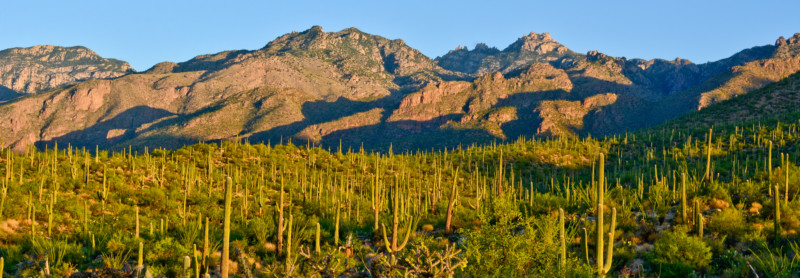
Saguaro cacti, some more than 150 years old and standing 40 feet tall or more, at Bear Canyon in Sabino Canyon in Tucson
When you land at Tucson International Airport (TUS) you have arrived in the heart of the unique Sonoran Desert, the only place on earth that is the natural habitat of the iconic and majestic Saguaro cactus. With an average of more than 350 days a year of sunshine you can play outdoors in wide open spaces or relax in the casualness of Tucson and its rich cultural heritage.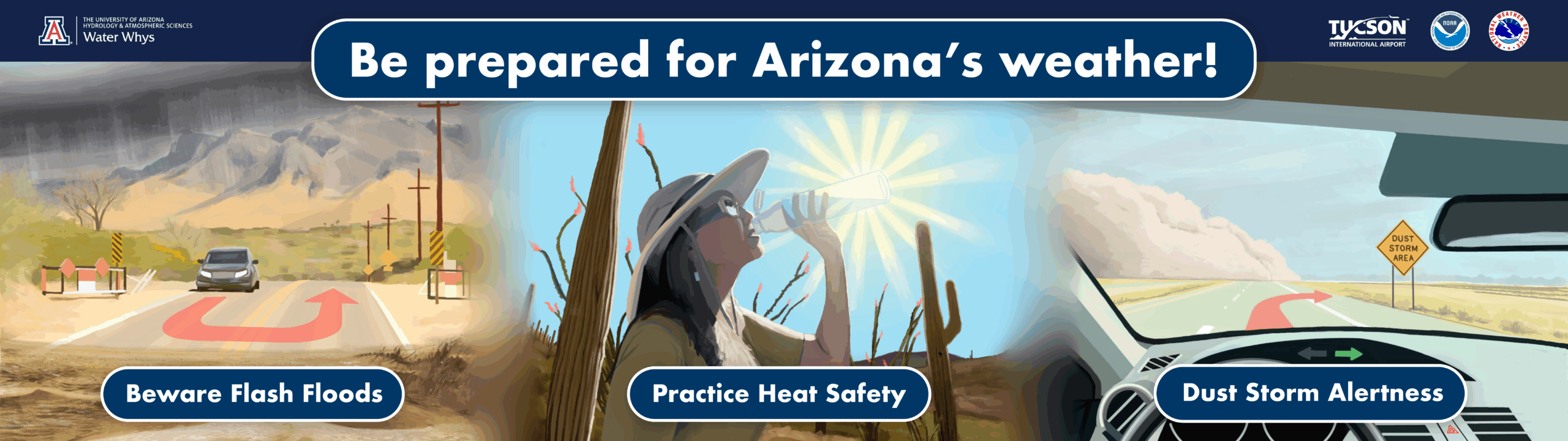
Be Prepared
While Arizona weather can be beautiful, it can also be dangerous. Check out the National Weather Service current forecast for the latest weather concerns and impacts. Here’s how to stay safe with three of Arizona’s most unique weather events.
Getting Oriented
 Surrounded on all four sides by mountains, Tucson makes an ideal setting to enjoy the outdoors whether it’s biking, hiking, golf, tennis, pickleball, climbing, fitness spas and wellness retreats or just chilling.
With a population of more than 1 million, Tucson uniquely combines the amenities of 21st century thinking with a deep respect for a sense of place and heritage. The region is home to world-renown resorts, golf courses, a thriving arts community and food. It was the first city in the United States to be named a UNESCO City of Gastronomy. It also celebrates being home to “The Best 23 Miles of Mexican Food.” The Arizona-Sonora Desert Museum is a unique indoor-outdoor exhibition featuring the wildlife of the Sonoran Desert and nearby, Old Tucson offers visitors a taste of the old west through modern shows themed to the season. The University of Arizona is ranked among the top 0.5% of universities in the world by the Center for World University Rankings.
Whatever your outdoor passion may be you are likely to find it in Southern Arizona.
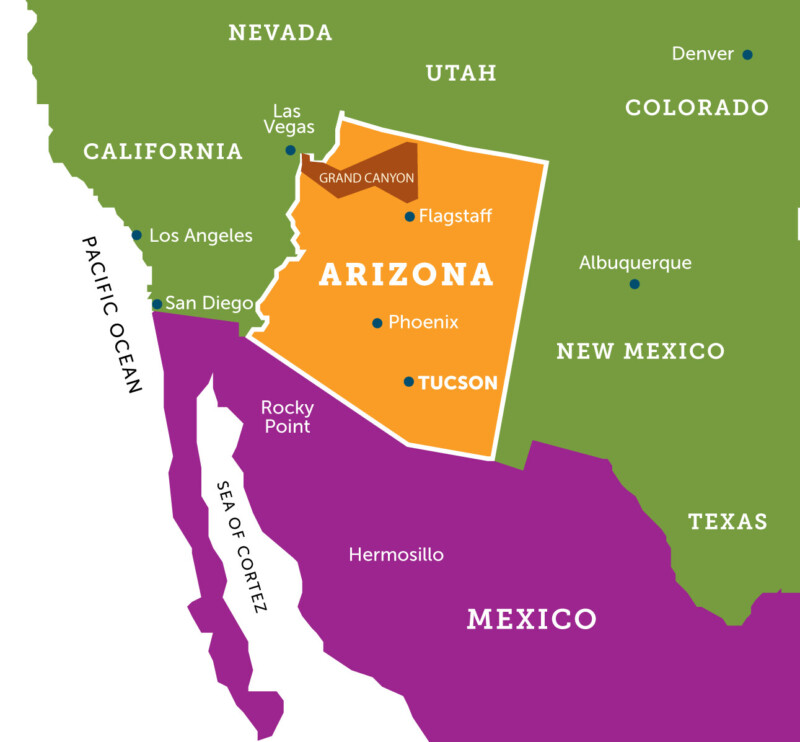
While there’s plenty to do and enjoy nearby, there is also the opportunity for some quick getaways. Mexico is only about an hour’s drive south. Puerto Peñasco, or Rocky Point, is “Arizona’s Beach” on the Sea of Cortez and about four hours’ drive away. The Grand Canyon is about 6 hours to the north. And, with usually reasonable air fares, Las Vegas, San Diego and Los Angeles are only quick flights of about an hour away. If you’re looking for a big city, nearly 5 million people live in metropolitan Phoenix, less than two hours’ drive north. Be forewarned, though, this is the western United States where things tend to be spread out and Phoenix, a relative youngster as cities go, has more of a “strip mall” vibe than a traditional urban central business district.
Mileage estimates to locations around Southern Arizona are here.
Getting Acquainted
Start exploring your options online at Visit Tucson or its Mexico marketing division Vamos a Tucson.

You’re invited to thumb through the pages of the latest Official Travel Guides below.
Visit Tucson can also help with planning meetings and provide information about special events, including the annual Tucson Gem and Mineral Shows.
Southern Arizona Heritage & Visitor Center
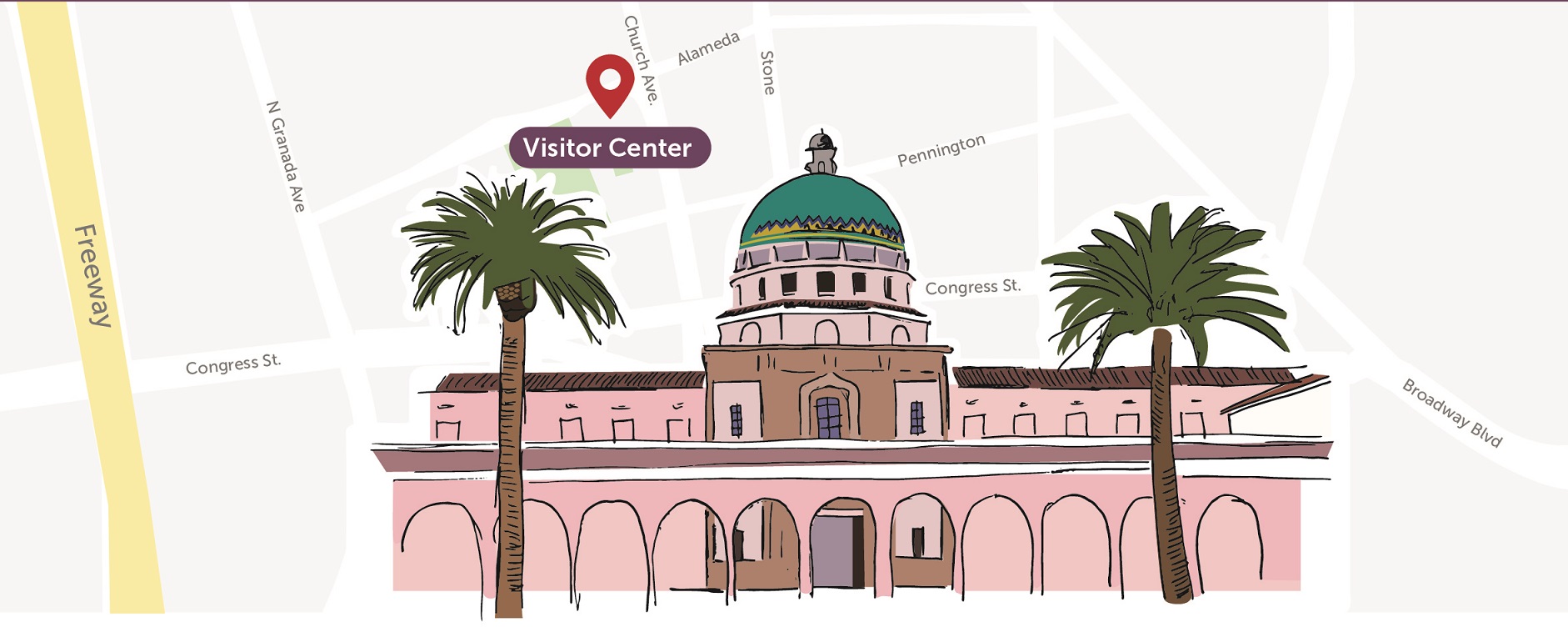
115 N. Church Ave., in the Historic Pima County Courthouse downtown. It’s about 9 miles northwest of Tucson International Airport. Google directions
The Visitor Center has exhibits, a theater, gallery and other features designed to introduce you to new places and provide inspiration to guide your journey around the Sonoran Desert and Sky Islands. There is also a gift shop.
Exhibits include seven storytelling portals focusing on:
- Innovation
- History
- Arts & Culture
- Food
- Recreation
- Water
- Nature
The center is a collaboration of Visit Tucson, Tucson’s January 8th Foundation, the University of Arizona Gem & Mineral Museum and Pima County Attractions and Tourism.
Hours: 10 a.m.-5 p.m. daily except closed New Year’s Day, Martin Luther King, Jr. Civil Rights Day, Presidents Day, Easter Sunday, Memorial Day, Independence Day, Labor Day, Veterans Day, Thanksgiving Day and the following Friday and Christmas Day.
More Information:
Southern Arizona Heritage & Visitor Center
Phone: 1-800-638-8350
How Far Is It to … ?
With so much to see and do in Southern Arizona, this chart shows cities, towns and points of interest with approximate mileage from Tucson International Airport (click on linked names to go to website):
Heat is the #1 weather-related killer in the United States and Arizona, resulting in hundreds of fatalities each year. Heat can be very taxing on the body and can lead to heat related illnesses or make existing health conditions worse. Everyone can be vulnerable to heat, but some more so than others. The following groups are particularly vulnerable to heat:
- Young children and infants are particularly vulnerable to heat-related illness and death, as their bodies are less able to adapt to heat than are adults.
- Older adults, particularly those who have pre-existing conditions, take certain medications, are living alone or have limited mobility who are exposed to extreme heat can experience multiple adverse effects.
- People with chronic medical conditions are more likely to have a serious health problem during a heat wave than healthy people.
- Pregnant women are also at higher risk. Extreme heat events have been associated with adverse birth outcomes such as low birth weight, preterm birth, and infant mortality, as well as congenital cataracts.
Check in with friends and relatives often during warm temperatures who fall in any of these populations, especially if they don’t have air conditioning.
To identify the risk of heat-related impacts across Arizona, see the latest HeatRisk forecast for the next 7 days.
Heat Safety in Vehicles: It is NEVER safe to leave a child, disabled person or pet locked in a car, even in the winter. Per the National Highway Traffic Safety Administration, your cars inside temperature can rise 20°F within the first 10 minutes, even with the window cracked. Vehicular heat deaths can occur at any time of the year.
Each year, more deaths occur due to flooding than from any other thunderstorm related hazard. The Centers for Disease Control and Prevention report that over half of all flood-related drownings occur when a vehicle is driven into hazardous flood water. The next highest percentage of flood-related deaths is due to walking into or near flood waters. People underestimate the force and power of water. Many of the deaths occur in cars swept downstream. Many of these drownings are preventable. Never drive around the barriers blocking a flooded road. The road may have collapsed under that water. A mere 6 inches of fast-moving flood water can knock over an adult. It takes just 12 inches of rushing water to carry away most cars and just 2 feet of rushing water can carry away SUVs and trucks. It is NEVER safe to drive or walk into flood waters. Turn Around, Don’t Drown.
What is the difference between a Flood Advisory, Flood Watch and a Flash Flood Warning issued by the National Weather Service?
Flash Flood Warning: Take Action! A Flash Flood Warning is issued when a flash flood is imminent or occurring. If you are in a flood prone area move immediately to high ground. A flash flood is a sudden violent flood that can take from minutes to hours to develop. It is even possible to experience a flash flood in areas not immediately receiving rain.
Flash Flood Warnings are changing to an Impact-Based format to improve public response. Read the fact sheet.
Flood Advisory: Be Aware: A Flood Advisory is issued when a specific weather event that is forecast to occur may become a nuisance. A Flood Advisory is issued when flooding is not expected to be bad enough to issue a warning. However, it may cause significant inconvenience, and if caution is not exercised, it could lead to situations that may threaten life and/or property.
Flood Watch: Be Prepared: A Flood Watch is issued when conditions are favorable for a specific hazardous weather event to occur. A Flood Watch is issued when conditions are favorable for flooding. It does not mean flooding will occur, but it is possible.
Dust storms can occur anywhere in the United States but are most common in the Southwest. Dust storms occur as a result of thunderstorm outflow winds. Strong thunderstorm winds can start a dust storm that can drastically reduce visibility. Your NWS Forecast Office will issue a Dust Storm Warning if one happens in your area.
Motorists Beware! Pull Aside, Stay Alive!
A dust storm usually arrives suddenly in the form of an advancing wall of dust and debris which may be miles long and several thousand feet high. They strike with little warning, making driving conditions hazardous. Blinding, choking dust can quickly reduce visibility, causing accidents that may involve chain collisions, creating massive pileups. Dust storms usually last only a few minutes, but the actions a motorist takes during the storm may be the most important of their life.
Dust Storm Safety Tips
- If dense dust is observed blowing across or approaching a roadway, pull your vehicle off the pavement as far as possible, stop, turn off lights, set the emergency brake, take your foot off of the brake pedal to be sure the taillights are not illuminated.
- Don’t enter the dust storm area if you can avoid it.
- If you can’t pull off the roadway, proceed at a speed suitable for visibility, turn on lights and sound horn occasionally. Use the painted center line to help guide you. Look for a safe place to pull off the roadway.
- Never stop on the traveled portion of the roadway.
Lights Out!
In the past, motorists driving in dust storms have pulled off the roadway, leaving lights on. Vehicles approaching from the rear and using the front driver’s lights as guides have inadvertently left the roadway and in some instances collided with the parked vehicle. Make sure all of your lights are off when you park off the roadway.
Find out more information from the Arizona Department of Transportation at pullasidestayalive.org/
Additional weather safety information can be found here.